Table of contents
Why do so many players keep chasing a life-changing jackpot, even when the odds are brutally clear and the “near miss” is, mathematically, still a miss? From the flashing lights to the celebratory sounds, casinos are designed to turn uncertainty into adrenaline, and hope into repeated play, yet the real driver often sits deeper than the game itself. Psychology explains why jackpots feel personal, why losses can feel “due” for reversal, and why some gamblers return with a conviction that the next spin will be different.
Jackpots turn chance into a story
One word fuels the chase: meaning. A progressive jackpot is not just a large number on a screen, it is a narrative device, a public countdown that invites players to imagine themselves as the next headline, and that invitation is powerful because humans are wired to think in stories rather than probabilities. Researchers in behavioural psychology have long documented how people overestimate the likelihood of vivid, emotionally charged outcomes, a bias closely related to the availability heuristic, where memorable examples come to mind faster than statistical reality; in gambling, the memorable example is the winner’s photo, the cheering crowd, and the “it could be you” framing.
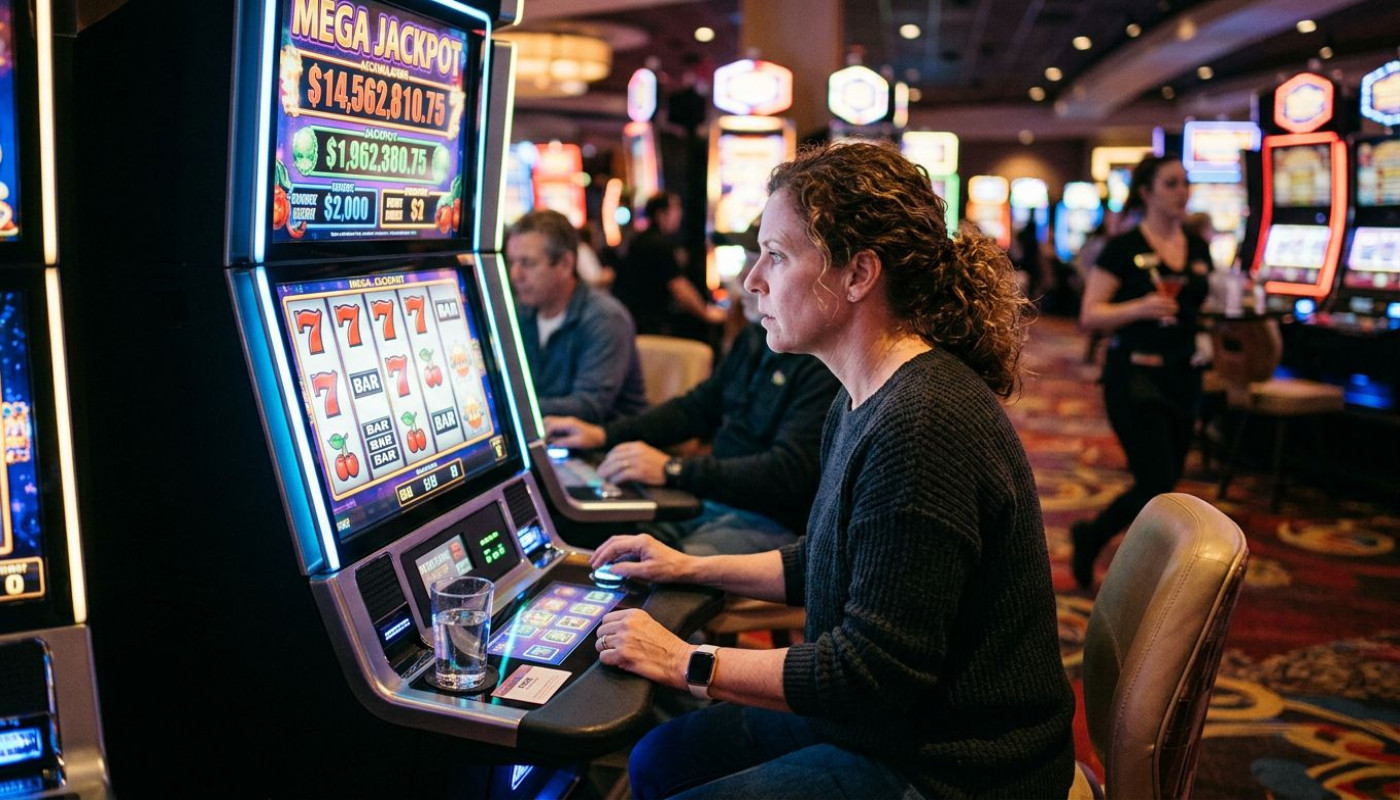
Casinos reinforce this narrative with constant cues. Bright displays broadcast jackpot totals, winners are announced, and some venues share testimonials, and these signals create what psychologists call social proof: if others win, winning feels more attainable. The underlying arithmetic does not change, yet attention shifts away from expected value and toward personal possibility, and that is the pivot where rational calculation gives way to identification: “People like me can win.” It also helps that jackpots often sit at the intersection of fantasy and financial anxiety, particularly in periods of rising living costs, where a single windfall appears to solve multiple problems at once, and the imagined relief becomes emotionally reinforcing even before any money is won.
The result is a subtle but potent distortion: rare events feel less rare when they are constantly displayed, narrated, and celebrated. In lotteries, the pattern is similar, with many countries publishing winners and highlighting “new millionaires,” and studies have shown that prominent winner publicity can lift participation by making the outcome feel psychologically closer. The same dynamic applies inside casinos, but faster, louder, and more immersive, and that immersion turns a probabilistic game into an experiential story where the player is the protagonist.
Near misses hit the brain hard
The cruel trick of the jackpot chase is that losing can still feel like winning. “Almost had it” is not neutral feedback; it is often a motivational jolt, and decades of research suggest that near misses can increase the urge to continue playing. In a landmark Nature study (2009), neuroscientists found that near misses on a slot-machine-like task activated brain regions associated with reward processing and motivation, even though the outcome was still a loss; that finding helps explain why a spin that lands one symbol short can feel like evidence of progress rather than proof of randomness.
Design amplifies the effect. Slot games, electronic roulette terminals, and many digital casino products are built around variable ratio reinforcement, the same schedule known to produce high rates of repeated behaviour because rewards arrive unpredictably. Add near misses, and the system delivers not only occasional wins, but frequent “signals” that the win is close, and those signals can create a false sense of learning: the player feels they are getting better, timing it right, reading patterns, even when the outcome is generated by a random number generator. This is not merely a matter of weak will; it is how the brain responds to cues that resemble success, especially under arousal.
There is also the “losses disguised as wins” phenomenon, reported in gambling research on multiline slots, where small payouts can be accompanied by celebratory sounds even if the net result is negative. The psychology is straightforward: the brain encodes the celebration, not the accounting, and over time that can blur the player’s internal scorekeeping. When near misses and disguised wins stack together, the jackpot feels closer than it is, and play can escalate not because of greed, but because the system continuously suggests that persistence is being rewarded.
The gambler’s fallacy keeps whispering “due”
Ask a regular player why they stayed, and you will often hear a familiar phrase: “It has to hit soon.” The gambler’s fallacy is the belief that a random process self-corrects in the short run, so a streak of losses means a win is “due,” even though each spin is independent. The fallacy persists because it feels intuitively fair; humans expect balance, and when outcomes cluster, the brain searches for a mechanism. In casino games where each event is independent, that mechanism does not exist, but the mind still tries to impose order.
This is where probability illiteracy meets emotional momentum. People understand, in theory, that the odds are long, yet in the moment they treat past spins as information about the next one. The intensity of this belief can increase under stress, fatigue, or after alcohol, and it is strengthened by selective memory: players remember the times a streak “broke” with a win, and forget the longer stretches where nothing changed. Behavioural economists have also explored how people misjudge randomness, expecting alternation rather than clustering, and that misjudgment makes normal variance look like a signal.
Another driver is the illusion of control, a phenomenon first described by psychologist Ellen Langer, where people behave as if they can influence outcomes determined by chance. In casinos this can be as simple as choosing “lucky” numbers, changing stake size, or timing the button press, and while these rituals can make the experience more engaging, they also increase commitment. Once a player believes their choices matter, stopping feels like abandoning a strategy that is about to pay off, and the jackpot becomes not a random event but the deserved result of persistence and “skill.”
Access, regulation and the new geography of play
The psychology of chasing jackpots does not exist in a vacuum; it is shaped by access, regulation, and the architecture of modern gambling markets. Online platforms have made high-volatility games available around the clock, and that constant availability changes how urges are managed. In a physical venue, leaving the building creates a natural break, but on a phone the “break” requires an active decision, and the frictionless return can be decisive when someone is chasing losses or chasing a jackpot high.
Players also move across jurisdictions. Some look for different game catalogues, alternative payment methods, or different bonus structures, and others search for operators licensed outside their home market. In that context, guides that map out options can influence behaviour, particularly among users who are already motivated to continue playing. For readers trying to understand what sits beyond domestic boundaries, resources listing non-UK casinos have become part of the broader ecosystem, and they intersect with the same psychological drivers: novelty, perceived advantage, and the belief that a different venue might finally deliver the big hit.
Regulators, meanwhile, increasingly focus on harm reduction, with measures such as affordability checks, marketing restrictions, and limits on certain game features in some markets. The evidence base is still evolving, but public health framing has grown, particularly in Europe and Australia, where policymakers argue that product design and advertising can intensify risk. Industry groups counter that responsible gambling tools, like deposit limits, time-outs, and self-exclusion, should be the core response, and many operators now surface these features more prominently. What is clear is that the environment matters: a high-speed, high-cue setting can magnify cognitive biases, while built-in pauses and clearer loss information can reduce the heat of the moment.
Practical ways to break the chase
Want the blunt truth? The jackpot is built to be chased. The good news is that behavioural science also points to concrete ways to reduce risk, without relying on willpower alone. Start with friction: set deposit and time limits before you play, and use tools that force a pause, because decisions made in advance are typically more rational than decisions made during arousal. If a platform offers reality checks that display time and net spend, turn them on; clear feedback interrupts the “I’m almost there” trance and returns attention to actual outcomes.
Budgeting works best when it is specific. Instead of “I’ll spend less,” decide on a fixed amount you can afford to lose, move it to a separate account or wallet, and treat it as entertainment spend, not an investment; once it is gone, stop for the day, and do not withdraw from other budgets to “win it back.” If you notice that near misses trigger you, change the context: step away for ten minutes, switch activities, or play only games with slower pacing, because speed is a multiplier of impulsive behaviour. Some people benefit from keeping a simple log of sessions, time, deposits, and withdrawals; it is boring, and that is precisely why it works.
If gambling starts to feel compulsive, escalate your tools quickly: self-exclusion schemes, blocking software, and bank transaction blocks can be effective, and seeking professional help is not an admission of failure but a proven route to recovery. In the UK, services like GamCare and the NHS provide pathways to support, and many other countries have equivalent helplines and specialist clinics. The goal is not moral purity; it is safety, clarity, and control over decisions that are otherwise engineered to be emotional.
What to do before your next session
Book a hard stop in your calendar, set a fixed budget, and activate reality checks before you log in. If you want extra protection, use deposit limits, cooling-off periods, or self-exclusion tools offered by operators and regulators. If the chase is already costing you more than money, contact a local support service and ask about counselling options and free programmes.
Similar articles